- #Nutrition
- #Psychology
Gained 5 Pounds Over Christmas? It's Mostly Water
The scale on December 26th is mostly reporting water and a lot of food still in transit. This post covers what part is actually fat, why it's small, and how to keep it that way without a January crash diet.
It's December 26th. You step on the scale out of a sense of duty, and it says you're five pounds heavier than you were on the 23rd. Before you sketch out a January of steamed broccoli and penance, look at what actually happened in those three days. Most of that number is water, plus a dinner that hasn't finished its trip yet.
A little of it is fat, and that little bit tends to stick around long after the pie is gone. That's the part worth a plan.
The December 26th Scale Jump
Your muscles store carbohydrate as glycogen, and glycogen doesn't travel light. In muscle biopsies, each gram of it is stored with at least three grams of water (Fernández-Elías et al., 2015). A few days of stuffing, rolls and pie tops those stores off, and the water comes along for the ride. Add a salty ham, which has your body holding extra fluid until the sodium clears, plus the plain weight of a lot of food still working its way through. That's water weight after a big meal, and a multi-pound overnight jump is completely ordinary.
Fat is much slower to show up. A pound of it holds roughly 3,500 calories, so five pounds in three days would take about 5,800 extra calories a day on top of everything you normally burn. Some uncles give it an honest try. Most people don't come close.
When researchers actually weighed 195 adults through the season, the average gain from mid-November to January was 0.37 kg, or about 0.8 lb (Yanovski et al., NEJM 2000). People in the study thought they'd gained about four times that much. A minority, under 10% of the group, did gain five pounds or more, and they were more likely to already be carrying extra weight. For everyone else the real gain was small, but it didn't come back off that spring or summer, so the number on the 26th isn't the thing to fight. The pound that's still there in February is.
Keep weighing in if that's your habit, but judge by the 7-10 day average, not by any single morning. Daily weight already swings by a few pounds for boring reasons, which our guide to weight-loss plateaus walks through. The holidays just turn the volume up.
Don't Try to Undo It
The expensive holiday mistake usually happens in January. You see the number, panic, and cut food to something heroic. The water drops, as it was going to anyway, and the starvation gets the credit. By the third week you're tired, short with everyone, and eating cereal over the sink at 10 p.m. That's the sequence that turns a festive week into a regain.
What works is boring: the next ordinary day, eat and train the way you did before Thanksgiving, carbs and all. The glycogen water and the sodium settle out on their own over the following days, and the scale drifts back toward where it was without you doing anything clever.
If the week knocked you off your logging or your workouts, read what happens when you miss a day. Short version: you pick up from where you are, not from where the guilt says you should be.
How to Not Gain Weight Over the Holidays: Protein First
Skip the strategy for every buffet and keep one rule: build the first plate around protein, then eat whatever you like on the second. Turkey, ham, shrimp cocktail, the meatballs nobody admits to making. Protein is filling and it's what your training needs, and a first plate built on it leaves a lot less room for the fourth cookie without any white-knuckling.
The easier trick is to bring the protein yourself. If you're asked to bring a dish, bring one that doubles as your anchor for the night. These two go over well at parties, and nobody will clock them as diet food.
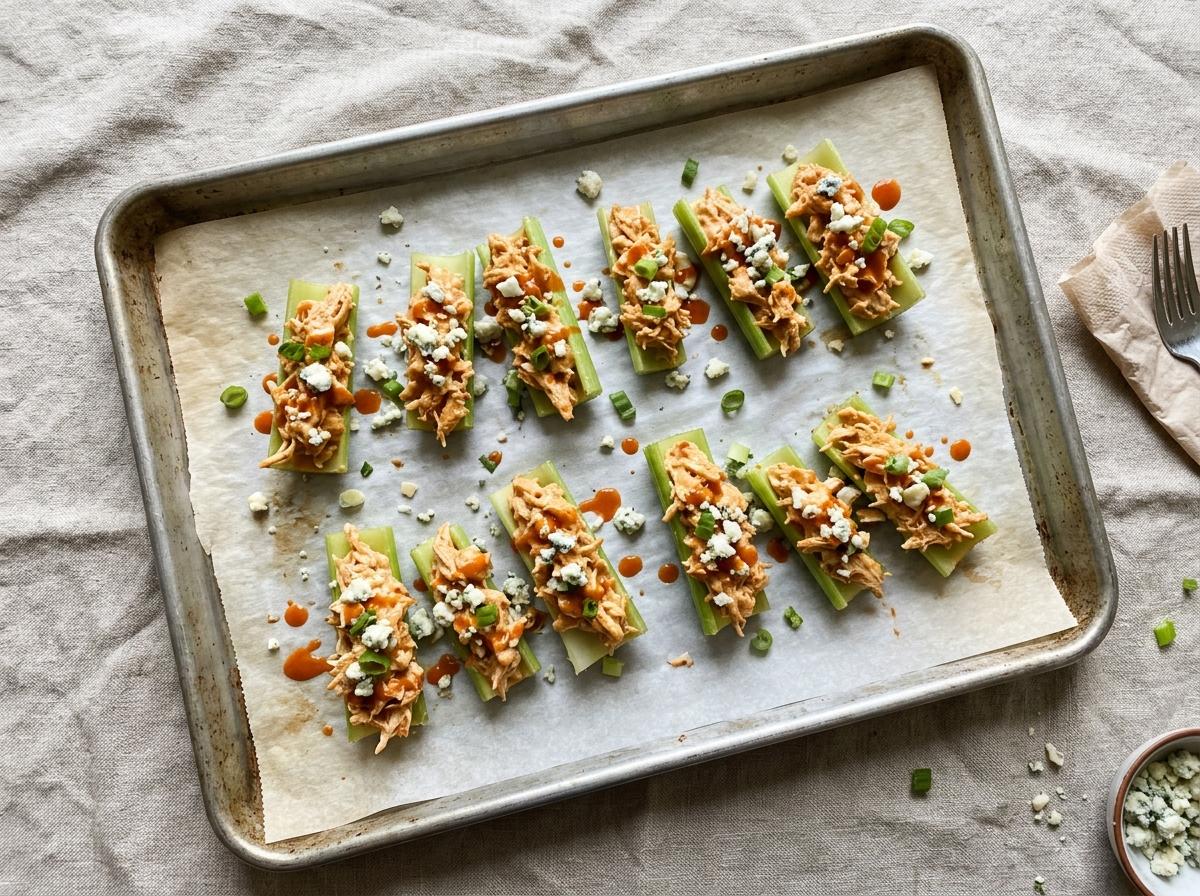
The celery boats swap Greek yogurt in for the usual mayo and cream cheese, so the buffalo filling is mostly chicken:
Buffalo Chicken Greek Yogurt Celery Boats
Shredded chicken breast and nonfat Greek yogurt make a buffalo filling with 36g protein per serving. Greek yogurt replaces the usual mayo and cream cheese. Packs well for the afternoon, and also works as a light lunch or after a workout.
- cal
- 230
- protein
- 36g
- carbs
- 6g
- fat
- 6g
The dip is chicken folded into a chipotle-lime cottage cheese base, with jicama sticks doing the scooping. Put a bowl of chips next to it anyway. You're a guest, not a missionary.
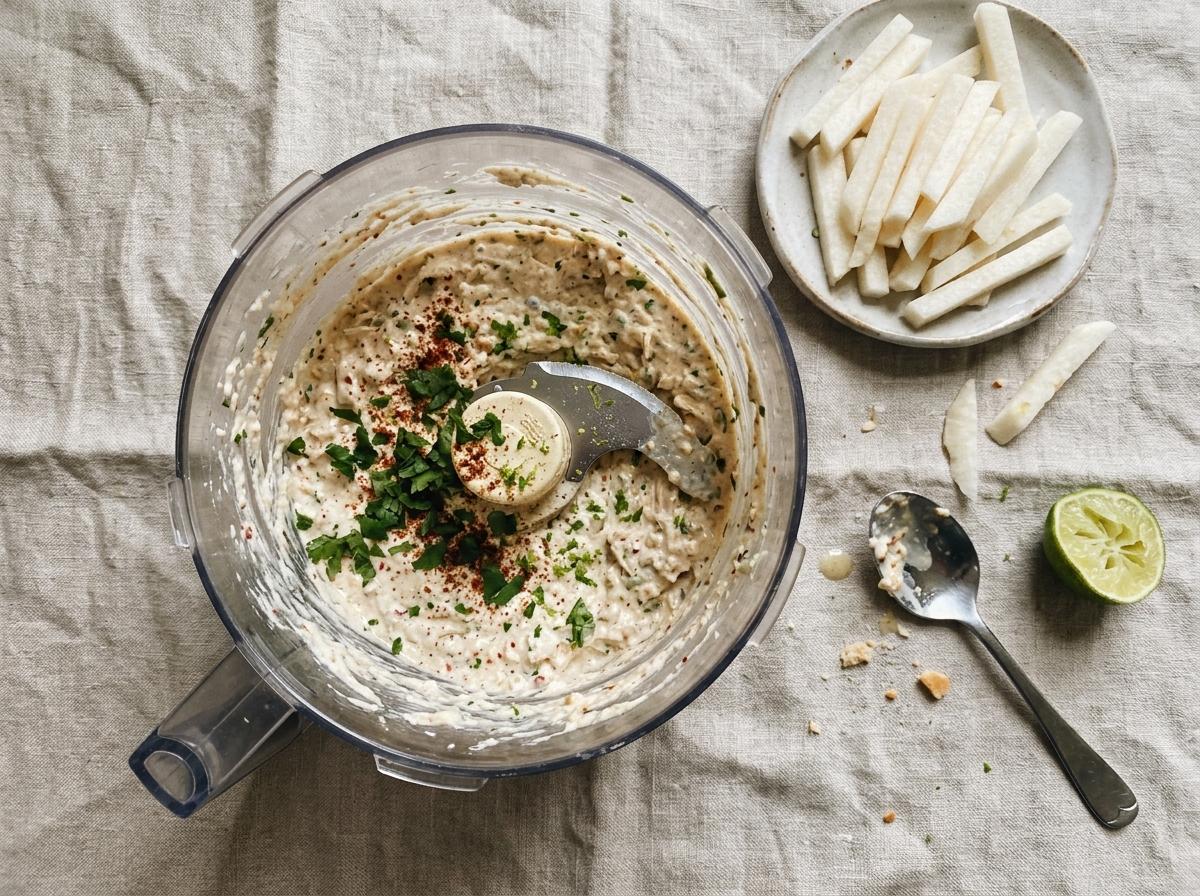
Chili-Lime Chicken Cottage Cheese Dip with Jicama
Shredded chicken breast folded into a chipotle-lime cottage cheese dip with cotija and pickled jalapeños. Jicama sticks do the scooping instead of chips. 38g protein per serving. Portion it into jars for the week, or put it out as a party dip.
- cal
- 272
- protein
- 37.9g
- carbs
- 14.5g
- fat
- 6.7g
The 20-Minute Minimum
Your gym is four states away. The in-laws' basement has a treadmill, but it's holding laundry. The hotel "fitness center" is one elliptical and a bowl of apples. Fine. You need a patch of floor and about twenty minutes.
One round:
Bodyweight squats: 12
Push-ups (or wall push-ups): 8-12
Glute bridges: 15
Lunges: 8 each leg
Plank: 30 seconds

Rest about a minute. Do 4-5 rounds.
Every move here comes from the beginner programs in Baisics, so nothing needs a tutorial. To make it harder, slow down the lowering half of each rep before you add more reps. If push-ups are easy, put your feet on a stable surface like the arm of a couch, the bottom stair or a sturdy chair against a wall for decline push-ups; if they're hard, use the wall. Our bodyweight progressions guide covers most of these moves, with ladders for push-ups, squats and planks.
Aim for two of these a week, enough to keep the habit warm. Your muscle isn't going anywhere fast: in a 2011 trial, younger adults who had trained three days a week for 16 weeks kept their muscle size for the next 32 weeks on a much smaller weekly dose, a third or a ninth of what they had been doing, and strength largely held even in the group that stopped training altogether (Bickel et al., 2011). Older adults in that study did not hold onto size on those smaller doses, so if that's you, lean toward the two sessions. The holidays are only a couple of weeks.
One Sunday of Meal Prep for the Week Between
The stretch between Christmas and New Year's is a strange no-man's-land: no schedule, leftover pie in every direction, and a fridge that is somehow full and contains nothing to eat. One Sunday of cooking fixes most of it. The slow cooker and the Instant Pot handle the long parts while you do something else.
Pick one recipe per slot. Everything below lands at 32–48g of protein per serving, which means the leftover pie becomes a side dish instead of a meal plan.
Breakfast
Make six sandwiches, freeze them, and microwave one on the way out the door. They also make a decent answer to "is there anything to eat?" at 11 a.m.
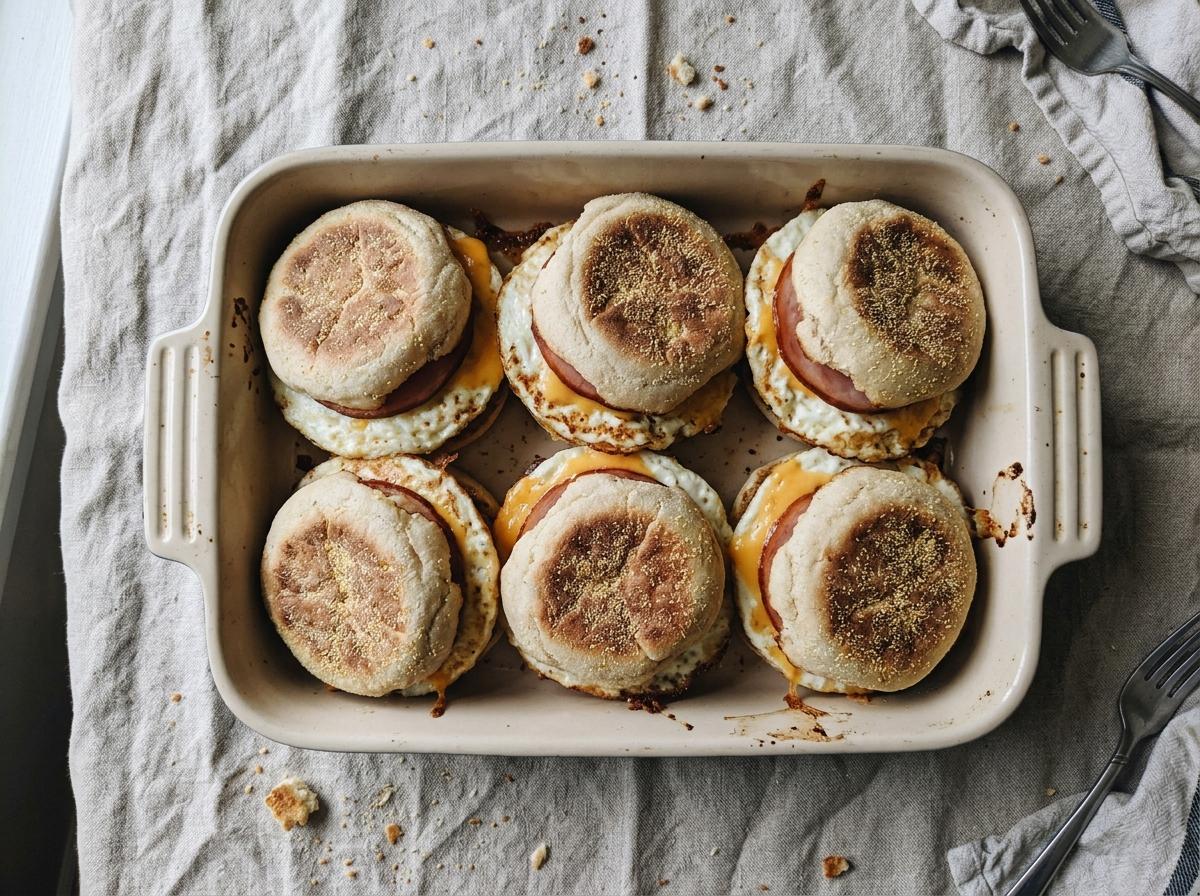
Freezer Egg White and Canadian Bacon English Muffin Sandwiches
Egg whites get blended with 2% cottage cheese so they bake up custardy instead of rubbery. Make six on Sunday and microwave one in 90 seconds. 39g protein per sandwich, and it works as breakfast or a post-workout snack.
- cal
- 338
- protein
- 38.8g
- carbs
- 27.3g
- fat
- 8g
Lunch
Chicken thighs and dried pintos cook together under pressure and shred into six bowls. The beans pull real weight here, not garnish duty.

Instant Pot Salsa Verde Chicken & Pinto Bowls
Bone-in chicken thighs and dried pinto beans cook together under pressure in 35 minutes active, about 55 minutes total wall time. Shreds into 6 meal-prep bowls — the beans do real macro work, not garnish duty.
- cal
- 290
- protein
- 32g
- carbs
- 28g
- fat
- 5g
Dinner (pick one)
The turkey chili is the one to make if you want a few portions in the freezer for the first week of January. The Greek stew is lighter on the palate after a week of heavy food. Stir the spinach in at the end.

Crock Pot Lean Turkey and Black Bean Chili
93/7 ground turkey swapped in for chuck — drops the fat-per-serving by half without losing the chili-bowl payoff. Black beans carry the body. Big batch, freezes for weeks.
- cal
- 290
- protein
- 32g
- carbs
- 24g
- fat
- 8g

Slow-Cooker Greek Chicken and White Bean Stew
Chicken breast and cannellini beans simmered with lemon, oregano, and tomato. A protein-and-fiber dinner that hits 48g per bowl. Stir in spinach at the end so it doesn't turn to mush.
- cal
- 405
- protein
- 48g
- carbs
- 29g
- fat
- 11g
Grab-and-go
Mix a few jars at night and you have something to eat before anyone asks you to help move a couch.
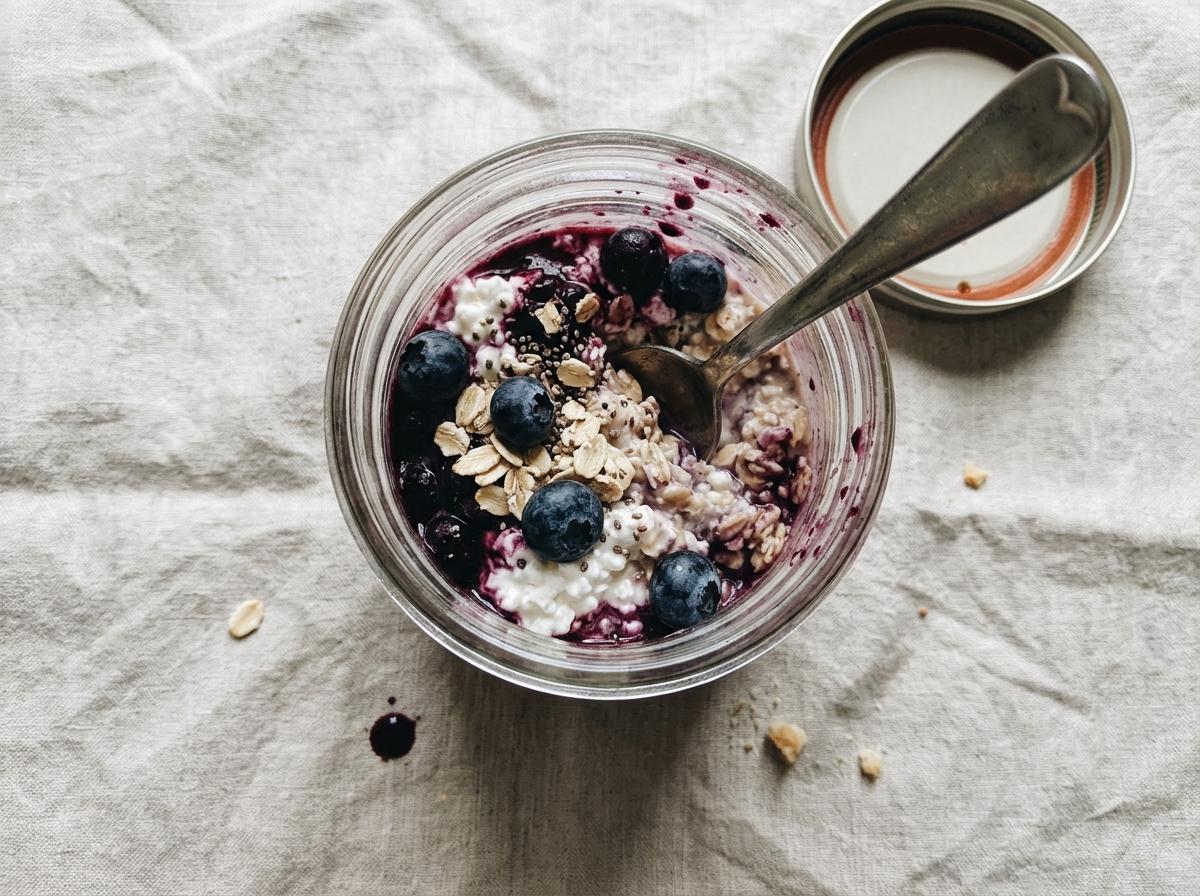
Blueberry Skyr and Cottage Cheese Overnight Oats
Skyr and 2% cottage cheese get you to 40g protein per jar, no powder needed. Mix it at night and grab it cold in the morning. It also works as an afternoon snack or after a workout. Blend the cottage cheese first if you don't like the curds.
- cal
- 465
- protein
- 39.5g
- carbs
- 57g
- fat
- 9.5g
For more on making batch cooking hit your numbers, see meal prep for macros and our Instant Pot meal prep for the whole week, or build a full week from the recipe library on the meal prep planner.
When You Miss Days Anyway
You will. A flight gets delayed, the kids pass around a stomach bug, and December 27th disappears into a thousand-piece puzzle. A few missed days don't erase a few months. What decides January is how quickly you come back, and a streak counter that resets to zero is exactly the wrong tool for that. We wrote about why streaks kill diet motivation if you want the long version.
The short version, in order of effort:
- Log a rough version of the day. A guess beats a blank.
- Do the 20-minute circuit if the real workout isn't happening.
- If neither is happening, eat a normal breakfast tomorrow. That counts too.
By the second week of January the water's gone and the scale is mostly telling the truth again. If you ate protein first, moved a couple of times a week and skipped the punishment diet, it'll be telling you something pretty close to what it said in November.
Get a plan that bends around the holidays
Tell Baisics your schedule, your gear and your goal, and get a training and nutrition plan you can actually keep in December.
Start FreeSources
- Yanovski JA et al. A prospective study of holiday weight gain. N Engl J Med. 2000;342(12):861-867.
- Fernández-Elías VE et al. Relationship between muscle water and glycogen recovery after prolonged exercise in the heat in humans. Eur J Appl Physiol. 2015;115(9):1919-1926.
- Bickel CS, Cross JM, Bamman MM. Exercise dosing to retain resistance training adaptations in young and older adults. Med Sci Sports Exerc. 2011;43(7):1177-1187.